
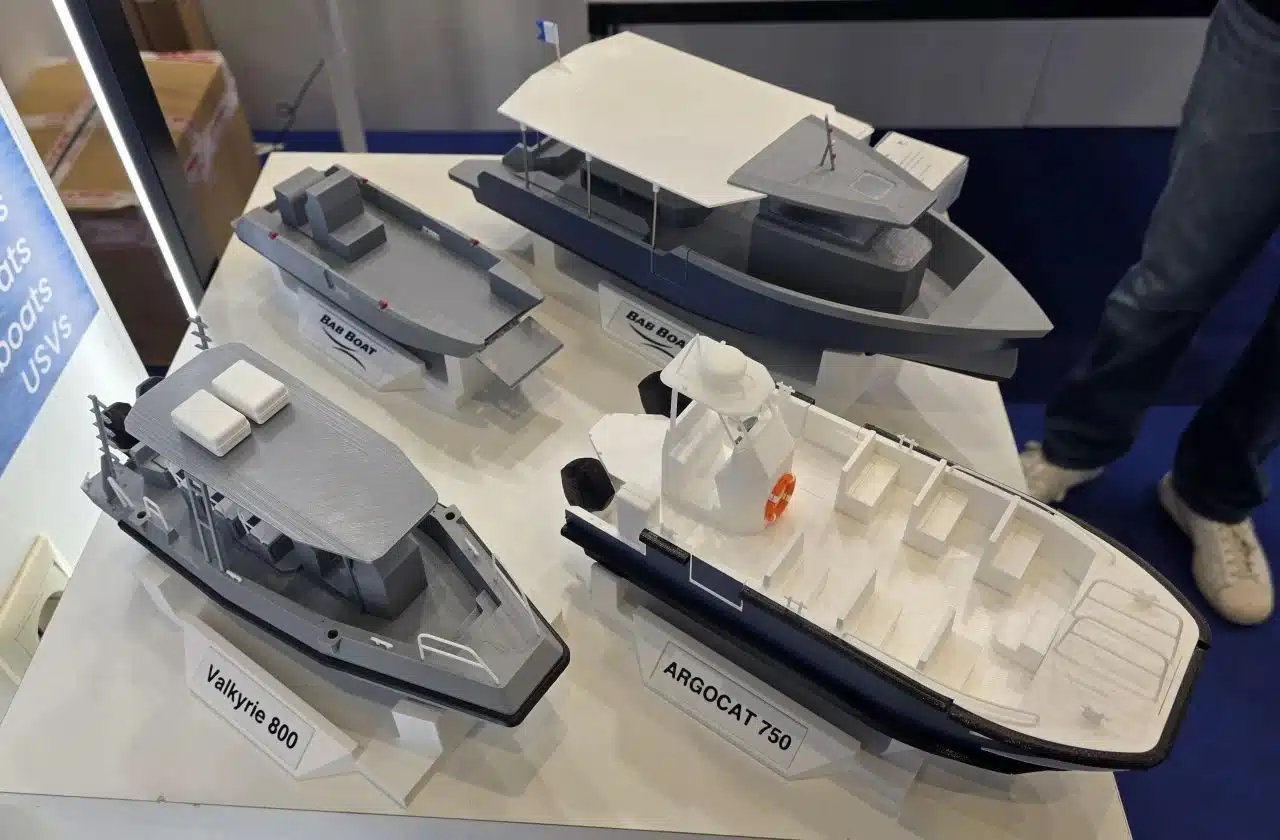
The discussions held with professionals at SMM Hamburg allowed us to compare our experience with naval drones in light of their operational needs. Offshore surveillance, bathymetry, and cargo transport: the use cases discussed align with the choices that have been shaping the autonomous platforms developed by [the relevant industry] for several years. Bord à Bord with Cavok EngineeringThey also highlight strong expectations regarding robustness and longevity.
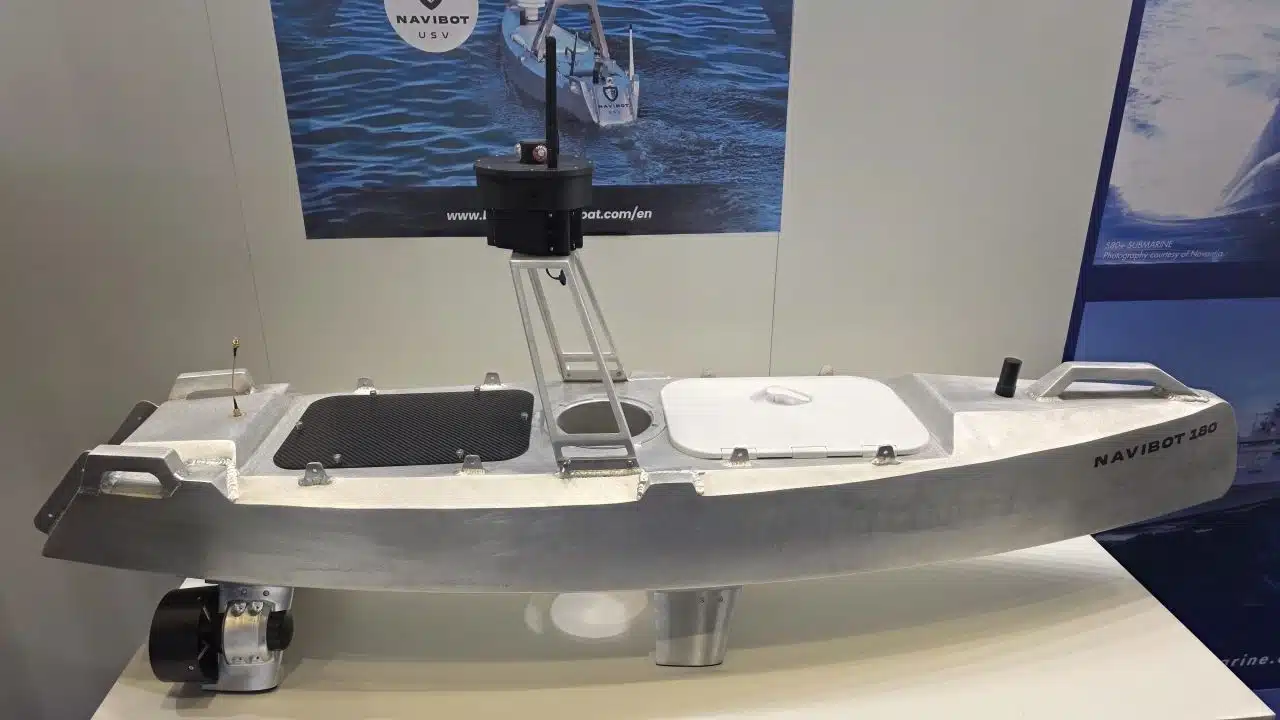
Platforms developed around missions
Bord à Bord For several years, they have been building autonomous, 100% electric-powered vessels, developed in collaboration with Cavok Engineering. Their design follows a simple logic: adapting the platform and its equipment to the mission rather than offering a single configuration.
The NAVIBOT range illustrates this approach with units designed for different navigation environments. NAVIBOT 80 and the NAVIBOT Coastal 180 are designed for inland waters and coastal operations, while the NAVIBOT OffshoreWith its 5-meter hull, it is designed for missions in offshore environments. For projects requiring greater capacity, Bord à Bord can also study and build larger autonomous units, developed specifically to meet the needs of the project.
These platforms can operate autonomously or remotely. Their configuration evolves according to the data to be collected, the intervention environment, and operational needs.

Surveillance and offshore services: growing needs
Discussions with visitors at SMM Hamburg revealed a strong interest from companies involved in offshore wind energy. Monitoring of offshore platforms and installations was among the applications mentioned, along with port surveillance and the monitoring of sensitive facilities.
These needs correspond to the configuration possibilities of the NAVIBOT. Depending on the mission, the platforms can integrate cameras, thermal imaging, maritime radar, AIS or LiDAR.
Discussions with professionals confirm above all that autonomy cannot be considered independently of use. The choice of platform, navigation methods, and onboard equipment depends directly on the mission and its environment.


From bathymetry to freight transport
Bathymetry is one of the practical applications of naval drones. Bord à BordThe platforms can notably accommodate single-beam or multi-beam probes for seabed mapping. Depending on the mission, other instruments can be integrated, such as a side-scan sonar, a CTD probe, or an ADCP.
This integration capability also makes it possible to consider environmental monitoring missions and water quality measurement, with sensors adapted to the data sought.
Discussions at the trade show also confirmed the interest in autonomous freight transport. Expressed needs range from small volumes to several tons for larger capacity units. For this type of application, platforms larger than those in the existing range can be custom-developed.
This design combines a robust maritime platform with navigation technologies developed for professional applications.
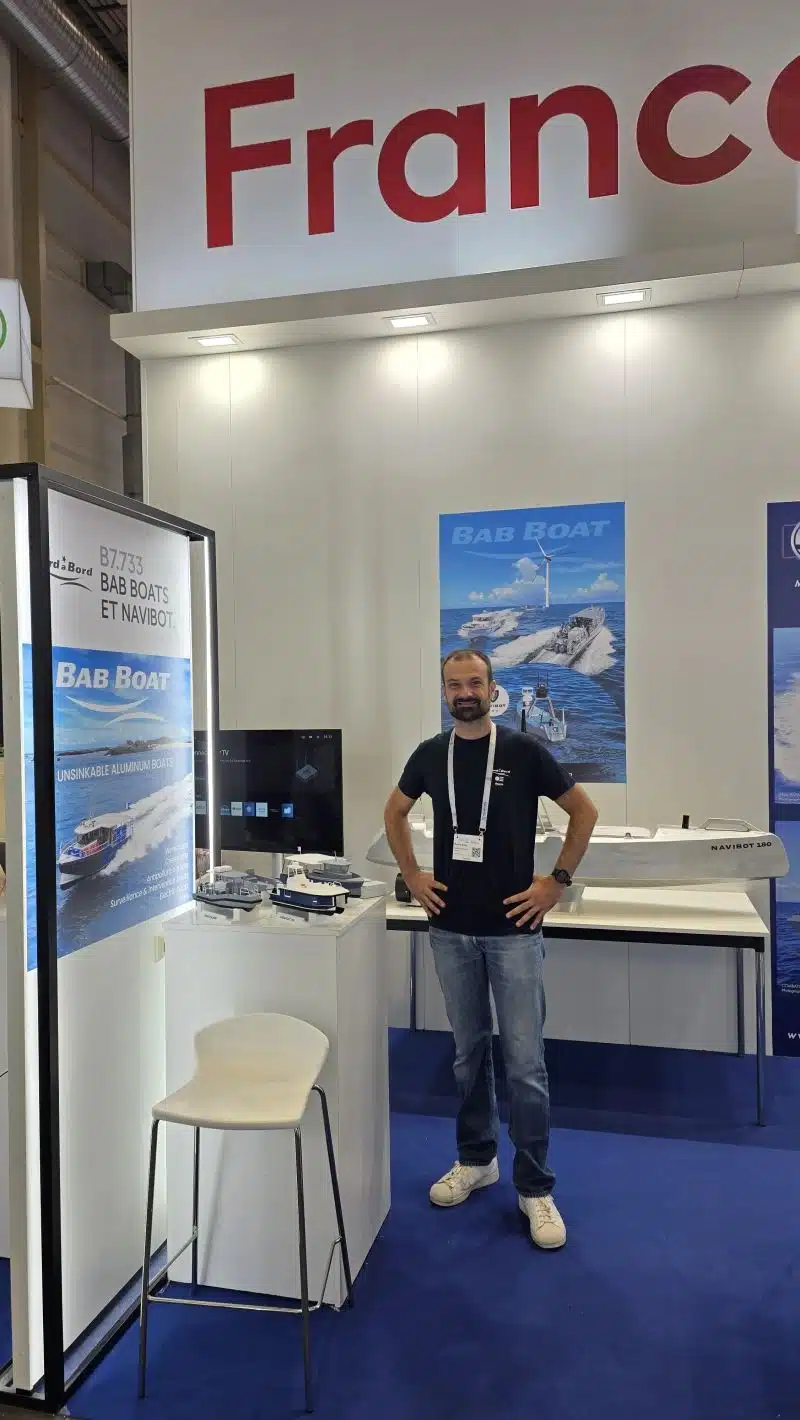
Naval experience remains crucial.
Among the feedback gathered from visitors, two characteristics were consistently highlighted: the robustness and longevity of the platforms. These observations are important because they go beyond the sole issue of embedded technologies.
A naval drone is, first and foremost, a vessel designed to operate in a maritime environment and fulfill a professional mission. Autonomous navigation systems, sensors, and communication systems must therefore be based on a platform specifically designed for this purpose.
The experience gained by Bord à Bord The construction of these vessels, combined with the work carried out with Cavok Engineering on their autonomy, allows us to approach projects from this dual naval and technological perspective. Exchanges with users and professionals at SMM Hamburg this expertise is then compared with operational realities and new uses under consideration.
Discover the range of surface drones
Autonomous boats with 100% electric propulsion